Clermont's housing stock skews young. The median home here was built in 2006, and most local subdivisions went up between 2000 and 2015. Those homes met the Florida energy code on the day they were finished. Twenty summers later, though, the original R-19 batt or settled blown fiberglass we find on inspection often performs closer to R-12 effectiveness. The 2023 Florida Building Code now sets the minimum at R-38 for our Climate Zone 2, and most of the homes we walk through fall well short of that mark.
That gap is the hidden reason Clermont homes waste more energy than they should. Homeowners searching for top insulation installation near Clermont FL have already identified the right fix, and the work itself is more affordable than most people expect.
TL;DR Quick Answers
top insulation installation near Clermont FL
In Clermont, top installers meet the 2023 Florida Building Code R-38 minimum at the ceiling plane and air-seal the attic first. Look for:
Active Florida DBPR license (verify at MyFloridaLicense.com)
Written scope: R-value target, material, air-sealing terms
Pre-installation attic inspection, not phone quotes
Duke Energy rebate handling included
References from inside Lake County
Top Takeaways
The 2023 Florida Building Code requires R-38 minimum at the ceiling plane in our Climate Zone 2. Most Clermont homes built before 2015 don't meet that today, even if they did at construction.
Air sealing the attic plane comes before adding insulation. Insulation laid over a leaky ceiling underperforms its rated R-value by a wide margin.
The four upgrades worth doing in a Lake County home are attic air sealing, attic insulation top-up, duct sealing, and weatherstripping at the building envelope.
Verify any Clermont insulation contractor's Florida DBPR license at MyFloridaLicense.com before you sign a contract.
Duke Energy operates utility rebate programs that can offset insulation upgrade costs. A qualified installer will handle that paperwork on your behalf.
Where Cooled Air Leaves a Clermont House
The ceiling plane is where cooled air leaves a Clermont house. Walls hold heat reasonably well, especially in the post-2000 construction common around Lake Minneola, but the line between your conditioned living space and the 130°F attic above it is doing most of the damage on your power bill. Good building insulation at that boundary is the main lever between a high August bill and a manageable one.
On an August afternoon, when our infrared cameras read 130°F or higher up there, every gap in the ceiling plane acts like a small chimney. Hot, humid attic air falls through recessed-can light penetrations, around HVAC chases, behind soffited cabinets, and through the pull-down attic stair if it doesn't have an insulated cover. Your AC fights every cubic foot of it.
Then there's the insulation itself. Blown fiberglass settles, cellulose loses R-value as moisture works into it during our summers, and batt insulation pulls away from joists when the wood expands and contracts. An eight-inch layer installed in 2004 may measure five inches today, performing well below what the package said it would.
Duct work is the third leak source, and the one most homeowners overlook. In Clermont's subdivision-era construction, the supply trunks usually run directly through that 130°F-plus attic space. Even insulated ducts gain heat through the metal at boots and joints. Seal those connections and you stop paying to cool air the ducts are losing.
Four Upgrades Worth Doing in a Clermont Home
In the Clermont homes we walk through, four upgrades save homeowners the most money. We run them in this order because each one sets up the next.
Attic air sealing first. Caulk and spray foam around every ceiling penetration before any new insulation goes down. Adding R-value over a leaky ceiling is like buying a winter coat with the zipper missing.
Attic insulation top-up to current code. Bring the ceiling plane to R-38 minimum, with R-49 the smart target if you plan to stay in the home more than a few years. The Department of Energy and ENERGY STAR both put Southern climates in the R-30 to R-49 range.
Duct sealing in the attic. Mastic-seal every joint, boot, and plenum connection. This is one of the highest-payback services we offer in Lake County.
Weatherstripping at the building envelope. The garage-to-house door, the front door threshold, and any pull-down attic stair are the most common offenders.
Run those four upgrades in sequence and most homeowners watch their cooling runtime drop noticeably. The Department of Energy puts the typical savings at up to 15% off heating and cooling costs from properly executed air sealing and insulation, depending on the home's starting condition. [VERIFY any home-specific dollar projection with operations before publication]
What R-38 Looks Like in a Clermont Attic
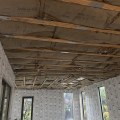
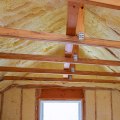
R-38 means roughly 13 inches of blown-in fiberglass at the ceiling plane, or about 11 inches of blown cellulose. R-49, the higher target, adds another four to five inches on top of that. When we walk into a Clermont attic and can see the wooden joists running across the floor, we already know the R-value is below code. If a flashlight beam lights up bare framing, you've got less than R-19 effective up there, and you're paying for it twelve months a year.
The two materials we recommend most often for retrofits here are blown fiberglass and open-cell spray foam. Blown fiberglass is the budget-friendly option that brings most homes to R-38 quickly, and it doesn't lose R-value the way cellulose can when Florida humidity climbs into the attic. Open-cell spray foam is the higher-investment choice that air-seals and insulates in one application, which is useful for homes with complicated rooflines or attic-mounted air handlers. We don't push either material. We recommend based on what we find when we inspect.
The honest test for whether your home is a good candidate for professional attic insulation is the joist test, a depth measurement, and a blower-door reading. All three take less than an hour.
How to Pick an Insulation Installer in Clermont
Five things separate a pro from a one-truck operator with a leaf blower full of fiberglass.
A valid Florida DBPR contractor license. Look up any company at MyFloridaLicense.com before you sign anything. The license classification for insulation work is typically a building contractor or specialty contractor designation.
A written scope of work. It should specify material, thickness, target R-value, square footage covered, air sealing included or excluded, and warranty terms.
A pre-installation inspection. Anyone who quotes you a price over the phone without looking in the attic is guessing. The thickness of existing insulation, the condition of the ducts, and the air leakage rate all change the right answer.
Duke Energy rebate handling. Reputable installers know which utility rebate programs are active and handle the paperwork for you. If a contractor doesn't know what rebates apply, that tells you something about how often they do this work.
References from inside Lake County. Ask for three homes within ten miles where they've completed similar work in the past year.
When you're ready, our crew handles attic insulation installation for homeowners across Lake County, and we'll walk your attic and write you an honest scope before quoting a number.
"In the early-2000s subdivisions around Lake Minneola, we typically find the original R-19 batt has settled to roughly R-12 effective performance. On August afternoons, our infrared cameras read attic air temperatures between 130°F and 140°F. That combination is doing real damage to homeowner comfort and to monthly power bills, and it's the single most fixable problem we see across Lake County."
7 Essential Resources
We've pulled together the primary-source references our team relies on when scoping insulation work in Lake County. All seven are government or industry-authoritative documents, verified live at the time of publication.
U.S. DOE Energy Saver – Adding Insulation to an Existing Home
U.S. DOE – Energy-Efficient Home Improvement Credit: Insulation and Air-Sealing
These government and industry-authoritative resources help homeowners better understand insulation standards, energy-efficiency requirements, tax incentives, and contractor verification, making them valuable references for anyone considering a professional attic insulation service to improve comfort, reduce HVAC strain, and increase long-term energy savings in Clermont and throughout Lake County.
Supporting Statistics
These three primary-source data points anchor the recommendations on this page. All are .gov or .edu sources, separate from the Essential Resources list above.
Florida attic peak temperatures run far above outdoor air
Researchers at the Florida Solar Energy Center at the University of Central Florida analyzed monitored attic air temperature data from 21 homes around the state and documented summer attic peaks well above outdoor ambient air. For Clermont homeowners, that means ducts and ceiling planes sit at extreme temperatures for several hours each summer afternoon, which puts steady strain on the building materials and on the cooling system pushing air through them.
Source: FSEC / UCF — Monitored Summer Peak Attic Air Temperatures in Florida Residences
Roof reflectivity and ceiling-plane insulation drive most cooling savings in Florida
A second FSEC study compared six roof constructions at the Flexible Roof Facility in Cocoa, Florida, and confirmed that roof reflectivity is one of the biggest drivers of summer attic temperatures. Paired with ceiling-plane insulation, those two factors carry most of the cooling load in Florida homes. The practical priority for Clermont homeowners is to insulate the attic plane first and choose a reflective roofing color when the roof comes up for replacement.
Source: FSEC / UCF — Comparative Summer Attic Thermal Performance of Six Roof Constructions
Proper insulation cuts electricity bills by around 15% on average
The Arizona State University Energy Efficiency Center, summarizing U.S. Department of Energy data, puts typical savings from proper insulation at around 15% off electricity bills. Florida tilts that math in the homeowner's favor. Cooling drives nearly half of annual residential energy use here, which means the dollar savings on a Clermont home that started below code tend to run well above the national average.
Source: ASU Energy Efficiency Center — Energy Savings by Insulation
Final Thoughts
For Clermont homeowners researching top insulation installation near Clermont FL, the answer almost always lands at the attic. We've walked 1980s ranch homes north of Highway 50 and 2008 master-planned subdivisions west of the lake, and the math runs the same way in both. Under-insulated ceiling planes bleed cooled air into spaces that hit 130°F by 2:00 PM. Fixing that gap is one of the most cost-effective home improvements available in our climate zone.
If we had to pick one place to start, it would be attic air sealing followed by insulation up to R-38 or R-49. Everything else, including new windows, smart thermostats, and more efficient AC equipment, works better once the building envelope is doing its job.
Frequently Asked Questions
What R-value does my Clermont attic actually need?
The Florida Building Code (8th Edition, 2023) requires a minimum of R-38 at the ceiling plane for Climate Zone 2, which covers all of Central Florida including Lake County. The Department of Energy and ENERGY STAR both recommend R-30 to R-49 for Southern climates, with R-49 the smart target for new attic insulation installations in homes where the owner plans to stay long-term.
How much can energy-efficient upgrades save a typical Clermont homeowner?
The Department of Energy puts typical savings at up to 15% on heating and cooling costs from air sealing combined with proper insulation. In Florida, where cooling drives most of the yearly energy load, that range often runs higher in homes that started badly insulated. Real numbers depend on the home's starting condition, the age of the AC system, and household usage habits. [VERIFY any specific dollar figure with operations before publication]
Is my early-2000s home likely underinsulated even though it passed code when built?
In most cases, yes. The Florida energy code has tightened multiple times since 2000, and the R-19 to R-30 batt or blown fiberglass that was standard in early-2000s Clermont subdivisions has typically settled by 30% to 40% over twenty Florida summers. A home that started at R-19 effective often performs closer to R-12 today, well below current code minimums. [VERIFY 30-40% settlement range with a primary industry source before publication]
Should I add insulation on top of what's there, or remove and replace?
In most Clermont attics, topping up over existing insulation is the right call as long as the existing material is dry, free of pest activity or mold, and not contaminated by knob-and-tube wiring or pre-1980 vermiculite. We remove and replace when we find moisture damage, rodent infestation, or any sign of older vermiculite, which can contain asbestos. The decision happens during inspection, not on the phone.
How do I find top insulation installation near Clermont FL?
Check the Florida DBPR license at MyFloridaLicense.com first, since state law requires an active license for insulation work. Then ask for a written scope that specifies R-value targets, material type, and whether air sealing is included. Look for an installer who performs a pre-installation attic inspection rather than quoting blind over the phone. References from inside Lake County are the tiebreaker when two installers look equivalent on paper.
Have Us Walk Your Attic Before You Spend a Dollar
We'll walk through your Clermont attic, take depth measurements and infrared readings, and tell you exactly what we'd recommend and what we'd skip. Schedule a free in-home assessment when you're ready, and we'll bring honest answers to the questions your power bill keeps asking.
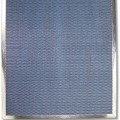
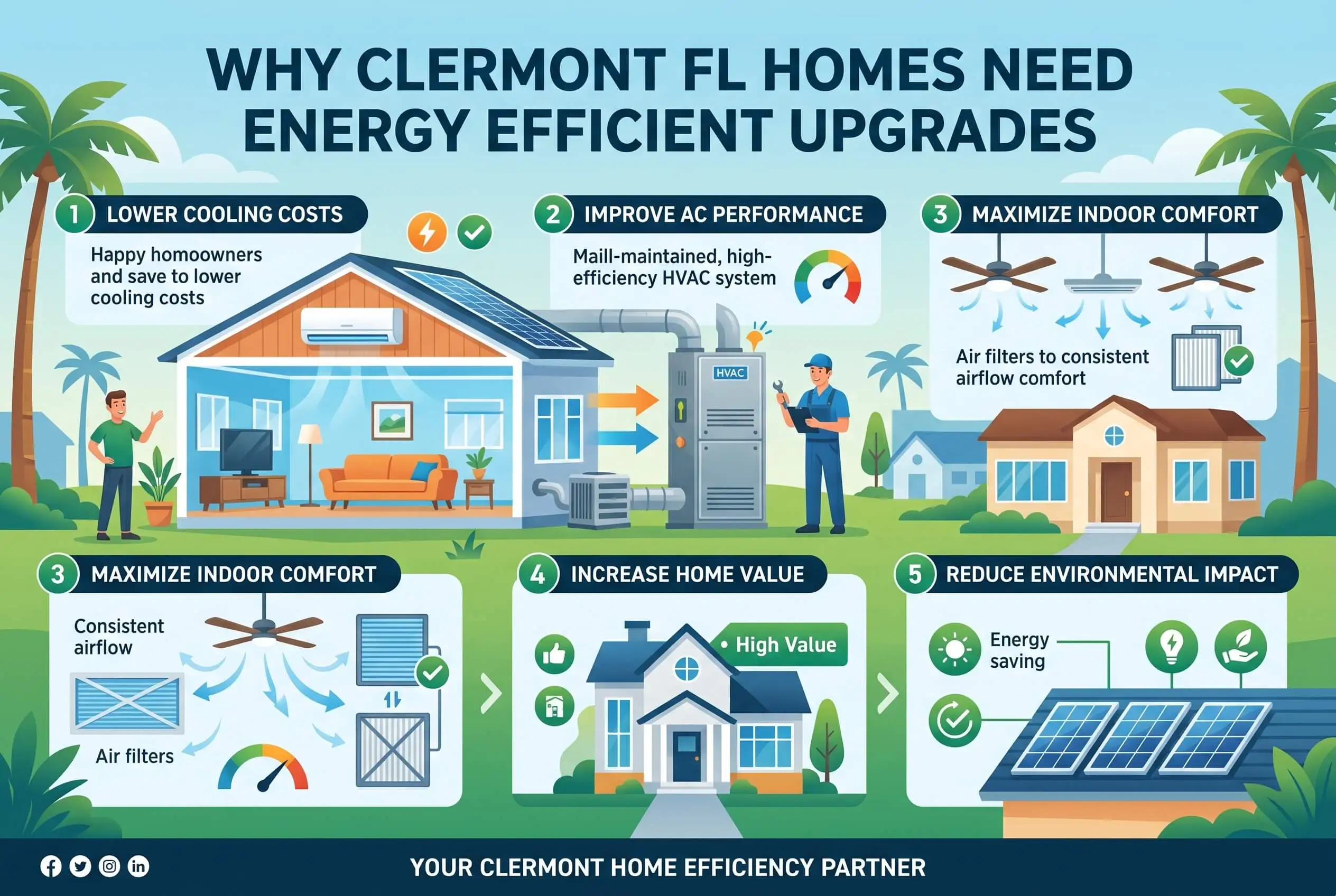
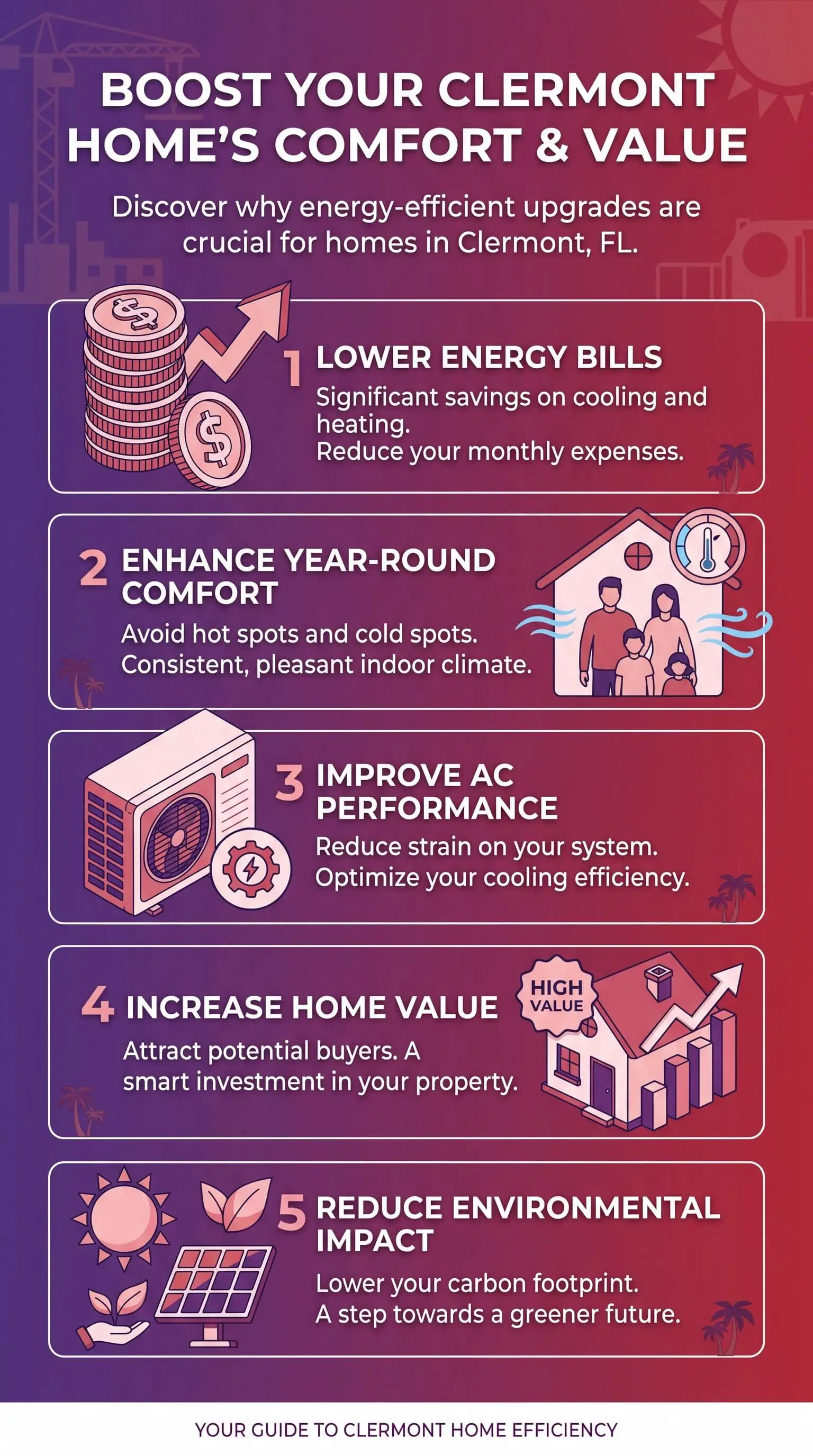
Homeowners researching why Clermont FL homes need energy efficient upgrades often focus on attic insulation and HVAC efficiency, but indoor air filtration also plays an important role in maintaining overall system performance. High-quality options like 12x24x1 defense pleated replacement filters, 12x12x1 MERV 8 HVAC air filters, and pleated furnace air filters help support cleaner airflow and reduce unnecessary HVAC strain in Florida’s year-round cooling climate. When combined with proper attic insulation, air sealing, and duct improvements, consistent filter replacement becomes part of a broader strategy for lowering energy costs and improving indoor comfort throughout Clermont homes.